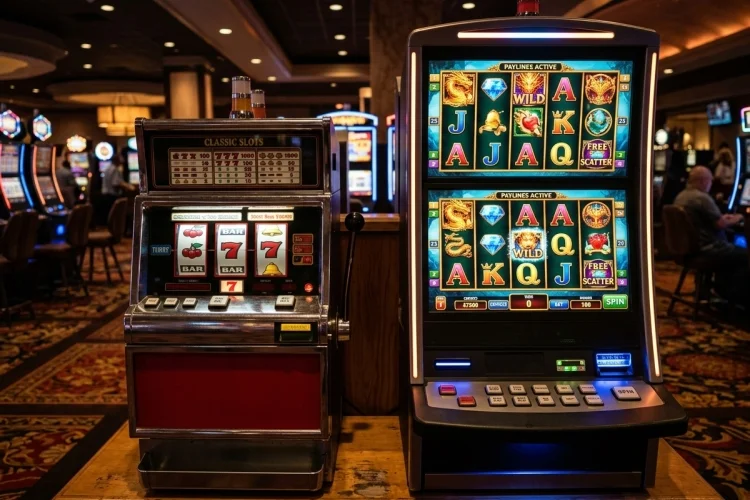
How to Check RTP Before Playing a Slot: A Simple Guide

How to Check RTP Before Playing a Slot: A Simple Guide

A slot might look exciting, offer huge multipliers, and advertise a massive maximum win, but there is another number worth checking before you press spin: RTP.

The tricky part is that the percentage listed in an online review may not always match the version available at your casino. Learning How to Check RTP Before Playing a Slot only takes a few minutes.

Once you know where to look, you can identify the theoretical return of the actual game you are opening, compare different versions, and avoid relying on outdated or incomplete information.

First, Understand What RTP Actually Means

RTP stands for return to player. It represents the theoretical percentage of wagers a game is designed to return as prizes over a very large number of rounds.

For example, a slot with 96% RTP theoretically returns 96% of total wagering over extensive play, leaving a 4% theoretical margin. That does not mean you should receive $96 back after wagering $100 during one session.

The UK Gambling Commission explains that RTP is an average achieved across a significant number of plays. Individual sessions can deviate substantially because random games naturally produce short-term variation.

So RTP is useful for comparing mathematical configurations, not predicting your next result.

Open the Game Information or Help Menu

The best place to begin is inside the slot itself.

Look for an information icon, settings menu, paytable, help section, game rules, or similar option. Depending on the provider, RTP may appear near the bottom of the rules page or in a section explaining theoretical payouts.

Some developers make the percentage even easier to find. Push Gaming says that RTP for games where the figure can vary by casino may be displayed in the game’s user panel or loading screen.

That makes the version loaded at the casino more useful than a percentage copied from a third-party website months or years ago.

If the number is easy to find before placing a wager, you already have a much more acurate basis for comparison.

Check the Loading Screen Before Skipping It

Most players instinctively close or ignore a slot’s loading screen.

That can be a mistake.

Provider information may appear there before the actual reels open. Push Gaming, for instance, explicitly notes on Tiki Tumble that the game’s RTP can be found in the user panel and loading screen, while also warning that RTP may vary per casino.

This is especially relevant when you regularly play the same title across different platforms.

Casino A and Casino B might display identical artwork while running different approved mathematical configurations. A quick look at the loading information can reveal that difference before any wagering begins.

Do Not Assume Every Casino Has the Same Version

One of the most important things to know about modern online slots is that a single title can exist at several RTP levels.

Wanted Dead or a Wild from Hacksaw Gaming is a clear example. The developer currently lists official RTP configurations of 96.38%, 94.55%, 92.33%, and 88.42% for the same title.

Quickspin’s Reel Nightmare is similarly available at 96%, 94%, 92%, and 87%.

That means searching for “Wanted Dead or a Wild RTP” and seeing 96.38% does not prove that every operator uses that configuration.

Always verify what the actual casino version says.

Compare the Casino Figure with the Provider Website

After finding the percentage inside the game, check the developer’s official website if possible.

Provider pages can show whether multiple configurations exist. This is particularly usefull when the number at a casino seems different from something you previously read.

Suppose an article says a game has 96% RTP but the casino version displays 92%. If the developer officially lists both 96% and 92% configurations, you have a straightforward explanation.

This approach is better than immediately assuming the casino page or review must be wrong.

It also helps identify outdated reviews that quote only the highest available version.

Know Where Regulated Casinos Should Provide Information

Disclosure rules depend on jurisdiction, but regulated markets can require important game information to be accessible.

Under Great Britain’s remote gambling technical standards, information that helps customers understand their chances of winning must be easily available before they commit to gamble. This can include RTP, house edge, margin, or relevant probability information.

The rules also state that applicable game rules and information about payouts should be available to players.

That does not mean every website worldwide will present information in exactly the same layout. Different jurisdictions use different regulatory frameworks.

Still, difficulty finding basic game information can be a reason to investigate a site more carefully before playing.

Understand Theoretical RTP Versus Actual RTP

There are two RTP terms that can easily create confusion.

Theoretical RTP is the percentage built into the mathematical design of a game. If your information panel says 96%, that is normally the figure you are interested in before playing.

Actual RTP describes what a game has returned during a particular historical period based on real turnover and prizes paid.

The UK Gambling Commission explains that actual RTP can temporarily sit above or below the theoretical target. As more rounds are recorded, the expected range generally becomes tighter.

Players usually cannot determine the theoretical configuration by observing a few hundred spins. Short results contain far too much randomness.

Do Not Try to Calculate RTP from Your Own Session

Imagine wagering $200 and finishing with $150.

Dividing $150 by $200 gives 75%, but that does not mean you were playing a 75% RTP game.

That calculation merely describes what happened during one very small sample. A second session could return 140%, while another might return 20%.

The theoretical percentage is based on the complete mathematical model and very large sample sizes.

This is why trying to reverse-engineer RTP from personal results can be misleeding. The proper method is simply to read the published theoretical figure.

Higher RTP Is Usually Better When Everything Else Is Equal

Suppose the identical slot is legitimately available at 96% and 92% RTP.

If all other conditions are truly equal, the 96% configuration has the better theoretical return.

Across $10,000 in cumulative wagering, 96% represents $9,600 in theoretical return while 92% represents $9,200. The mathematical difference is $400.

Real results will not follow those numbers neatly, particularly over small samples. Someone using the 92% version could still hit a major bonus immediately.

The point is not that higher RTP guarantees a better session. It simply provides a lower theoretical house margin over the long run.

Check Volatility Separately

RTP should not be used as shorthand for everything about a slot.

Volatility describes how payouts are distributed. A highly volatile slot may produce longer quiet stretches while concentrating more of its theoretical return in larger, less frequent outcomes.

Reel Nightmare, for example, is described by Quickspin as highly volatile while simultaneously being offered at four different RTP levels.

This demonstrates why a proper comparision should include RTP, volatility, hit behaviour, maximum payout, and feature structure.

A higher theoretical return does not necessarily create more frequent wins.

Create a Quick RTP-Checking Routine

You do not need complicated calculations before every game.

Start by opening the slot and checking its information panel or loading screen. Note the RTP shown there, then visit the official provider page if you want to confirm whether other configurations exist.

If a review quotes a different percentage, prioritize the active version displayed by the game rather than assuming the review applies everywhere.

Finally, consider volatility and bonus mechanics separately.

This entire process can take less time than reading a long promotional description, yet it tells you something far more meaningful about the underlying mathematics.

Knowing How to Check RTP Before Playing a Slot is mostly about looking in the right places. Check the loading screen, help menu, paytable, or rules, then compare the active figure with the provider’s official specifications.

Never assume every casino carries the same version, and remember that RTP represents long-term mathematics rather than a guaranteed session result. Make the check part of your normal routine before playing.


Best Free Slots with Scatter Symbols: Games and Features to Try

Best Free Slots with Scatter Symbols: Games and Features to Try

A few matching symbols normally need to land on specific paylines to create a slot win. Scatter symbols play by different rules.

In many games, they can activate a feature simply by appearing anywhere on the reels, making them some of the easiest special symbols to recognize.

The Best Free Slots with Scatter Symbols let you explore these mechanics without spending real money.

Some scatters unlock free spins, others retrigger bonuses, and a few double as wilds or carry instant prizes. Testing them in demo mode is a simple way to understand what each feature actually does.

Why Scatter Symbols Are Different

A scatter generally does not need to follow a traditional payline. Instead, the game checks how many scatter symbols appear across the grid.

Three, four, or five scatters commonly activate a feature, although the exact requirement depends on the game. Some titles also award direct scatter payouts before opening the bonus round.

That flexibility is why scatters appear in so many modern slots. They can serve as a simple gateway to free spins while allowing developers to attach additional mechanics such as multipliers, expanding symbols, or retriggers.

The important thing is to read each paytable rather than assuming every scatter behaves the same way.

Book of Dead Offers a Classic Scatter Setup

Rich Wilde and the Book of Dead is a straightforward example of traditional scatter mechanics.

Landing three Book scatter symbols unlocks ten free spins. Before the feature starts, one normal symbol is randomly selected as the Special Expanding Symbol. If three or more scatters appear again during the bonus, another ten free spins are awarded.

Play’n GO also provides an official free version of the game, so the feature can be explored without a purchase.

This makes Book of Dead a useful starting point for anyone unfamiliar with scatter-triggered free spins. The rules are simple enough to understand while still showing how scatters can interact with a second major feature.

Sweet Bonanza 1000 Uses Lollipop Scatters

Sweet Bonanza 1000 gives scatters a role inside a very different type of slot.

Instead of traditional paylines, matching symbols can pay anywhere on the 6×5 grid. Four or more lollipop scatters trigger ten free spins. During the bonus, multiplier symbols can reach as high as 1,000x, while three or more additional scatters award five extra spins.

The tumbles also mean one paid spin can produce several consecutive winning combinations before the sequence ends.

For demo players, this makes the game useful for comparing two mechanics simultaneously: scatter-based bonus activation and tumbling wins. It can seem a little confussing initially, but the structure becomes much clearer after a few free rounds.

Jammin’ Jars Makes the Scatter a Wild Too

Not every scatter exists only to open a bonus.

In Jammin’ Jars, the Jam Jar symbol acts as both a scatter and a wild. Each jar also carries a multiplier starting at 1x, which applies whenever it contributes to a winning cluster. Landing three or more Jam Jars anywhere on the 8×8 grid triggers the free-games feature.

That gives one symbol several jobs at once.

Jammin’ Jars also uses cascading cluster wins instead of fixed paylines. Push Gaming classifies the title as high volatility and currently lists RTP options of 96.83% and 94.25%, noting that configurations may vary by casino.

It is a good example of why the word “scatter” does not tell you everything about a symbol.

Gonzo’s Quest Links Scatters with Wilds

Gonzo’s Quest approaches scatter activation in another interesting way.

Three Free Fall Scatter symbols on reels one, two, and three trigger ten Free Falls. However, its wilds can also substitute for Free Fall scatters, meaning a combination of scatters and an eligible wild can help activate the bonus.

During Free Falls, the Avalanche multiplier can climb as high as 15x rather than the 5x maximum used in the base game. Additional scatters appearing during the feature can retrigger more spins.

Evolution provides a demo version without registration where available. Demo winnings cannot be withdrawn, but the mode is usefull for seeing how scatter substitution and Avalanche mechanics interact.

Blue Wizard Shows Another Retrigger Style

Quickspin’s Blue Wizard uses a more conventional free-spin scatter trigger.

Landing three or more scatter symbols awards six initial free spins. The feature can then be retriggered, while wild symbols appearing on the middle reel during free spins may carry multipliers up to 16x.

The game also includes a seperate Fire Blaze Respin feature activated by Crystal Ball symbols.

That distinction is worth noticing. The scatter is responsible for one bonus, while another special symbol controls a completely different feature.

Free demos make these differences easier to understand because you can explore the interface without having to learn the rules while real funds are involved.

Retriggering Can Matter More Than the Initial Bonus

Getting into free spins is only part of the story.

Two games might both award ten free spins from three scatters, yet their bonuses could feel completely different if one allows repeated retriggers while the other does not.

Book of Dead, for example, allows three or more scatter symbols during free spins to award another ten spins. Gonzo’s Quest can also extend its Free Fall feature through additional scatters.

Longer features can create more opportunities for bonus mechanics to appear, but they do not guarantee larger overall payouts.

The random number generator still determines each outcome.

Demo Mode Is Best for Learning, Not Predicting

A free slot can show you exactly what happens when scatters land.

You can learn how many are required, whether they pay independently, whether they retrigger a feature, and what changes once free spins begin.

What a demo cannot tell you is what will happen in a future session.

Triggering three bonuses within fifty virtual spins does not mean the scatter is unusually easy to hit. Random sequences sometimes cluster together simply by chance.

Treat demo results as examples of possible outcomes rather than evidence of future probablity.

Compare More Than the Scatter Feature

The best scatter mechanic is not automatically found in the slot with the longest free-spin round.

Consider RTP, volatility, grid size, payout method, maximum win, and any multiplier mechanics connected to the bonus.

You may prefer Book of Dead because the feature is straightforward, while Jammin’ Jars may be more appealing if you enjoy clusters and multiplier wilds. Sweet Bonanza 1000 suits players who like tumbling symbols and larger bonus multipliers.

Free play gives you the chance to make that comparision without financial pressure.

The Best Free Slots with Scatter Symbols show how flexible one special symbol can be. Book of Dead keeps the concept classic, Sweet Bonanza 1000 adds tumbles and multipliers, while Jammin’ Jars turns its scatter into a wild as well.

Try the demos, study the paytable, and focus on understanding how each bonus works rather than judging a slot from one lucky session.

Best Online Slots with High Maximum Wins: Big-Potential Games

Best Online Slots with High Maximum Wins: Big-Potential Games

A slot advertising a maximum win of 100,000x, 300,000x, or even 500,000x your stake immediately grabs attention. Those numbers suggest enormous potential, but there is an important catch: maximum payout and realistic payout frequency are two very different things.

The Best Online Slots with High Maximum Wins combine huge theoretical prizes with interesting mechanics, bonus rounds, multipliers, and distinctive gameplay.

Some lean heavily into extreme volatility, while others offer slightly more approachable formats. Below, we look at several standout examples and explain what those headline numbers really mean.

Tombstone Slaughter Pushes Max Wins to 500,000x

Nolimit City’s Tombstone Slaughter: El Gordo’s Revenge currently sits at the extreme end of fixed-payout slots. The developer lists a maximum payout of 500,000x the base bet, alongside a 96% RTP.

That means a theoretical €1 qualifying stake could reach the game’s €500,000 maximum payout, subject to operator limits and local rules.

The number sounds incredible, but context matters. Nolimit City lists its max-win probability at roughly 1 in 189 million, highlighting just how unusual the top result is. The developer also describes the title as insanely volatile.

Its mechanics include xNudge wilds, revolver features, multipliers, and different bonus modes. It is basically designed around extreme swings rather than steady, predictable wins.

Tombstone R.I.P Still Offers a Massive 300,000x Ceiling

Before Tombstone Slaughter arrived, Tombstone R.I.P was already considered an unusually aggressive high-potential slot.

Its maximum payout reaches 300,000x the bet, while the listed RTP is 96.08%. Nolimit City also reports a maximum-win probability of approximately 1 in 130 million.

The slot uses mechanics such as xRIP, xSplit, and several free-spin configurations. Large multipliers can appear during certain features, creating the kind of complicated combinations required to approach its enormous payout cap.

This is also a useful reminder that a gigantic maximum does not equal better short-term odds. A slot can technically pay 300,000x and still produce many low-paying or non-paying rounds along the way.

Money Train 4 Brings 150,000x with Feature-Heavy Gameplay

Relax Gaming’s Money Train series is known for combining special characters and respin mechanics. Money Train 4 increased the franchise’s win ceiling to 150,000x the stake.

The game includes more than 20 features, with characters such as the Arms Dealer, Upgrader, Unlocker, and Reset interacting during bonus sequences.

That complexity is a major part of its appeal. Instead of one simple multiplier driving the biggest payouts, different character abilities can interact and build increasingly powerful reel setups.

For players comparing high max-win slots, this demonstrates why gameplay matters alongside raw payout potential. A 150,000x game with layered mechanics can feel very diferent from another slot with the same headline limit.

Deadwood R.I.P Combines 100,000x Potential with Extreme Volatility

Deadwood R.I.P is another Nolimit City release aimed at players comfortable with aggressive variance.

The maximum payout is 100,000x the base bet, with an official RTP of 96.09%. Nolimit City lists the chance of reaching that maximum at approximately 1 in 150 million.

The game uses xNudge, xSplit, xRIP, Wild multipliers, Quick Draw, and several bonus configurations. These systems can interact in complex ways, particularly during free-spin rounds.

One unusual element is xRIP. Under certain conditions where a generated payout is below the base stake, the feature removes that payout completely. It makes the mathematical experience intentionally harsh and contributes to the game’s extream volatility.

Gates of Olympus Super Scatter Offers 50,000x

Not every high maximum-win slot needs to reach six figures.

Pragmatic Play’s Gates of Olympus Super Scatter offers a 50,000x maximum win, significantly above the 5,000x limit of the original Gates of Olympus and the 15,000x ceiling of Gates of Olympus 1000.

The game retains the familiar tumbling format and random multiplier symbols worth between 2x and 500x. Its major addition is the Super Scatter.

During a qualifying bonus trigger, four Super Scatters can award the full 50,000x prize directly. Smaller quantities can provide 100x, 500x, or 5,000x prizes.

This creates a very different route toward the maximum compared with complicated multiplier accumulation.

Why Maximum Win Does Not Tell the Whole Story

The biggest number in a slot’s promotional material is easy to notice, but it should never be the only comparison point.

Imagine Game A offering 500,000x and Game B offering 25,000x. Game A does not automatically offer better value. Its top result may be massively less frequent, while its volatility could produce longer losing periods.

RTP is another seperate measurement. It represents the theoretical proportion of wagers returned across a huge number of game rounds. A high maximum win does not automatically produce a higher RTP.

Volatility, hit frequency, bonus frequency, payout distribution, and maximum-win probability can all provide additional context.

Bet Size Changes the Cash Value, Not the Multiplier

A maximum win expressed as “x bet” scales with the qualifying wager.

For example, a 10,000x payout from a €0.20 stake equals €2,000. The same multiplier on a €1 stake equals €10,000.

Increasing the stake does not normally make the advertised multiplier itself larger. It simply increases the monetary value attached to that multiplier.

Players should therefore avoid raising bets purely because a huge theoretical ceiling exists. High-volatility games can consume a bankroll much faster than expected, especially when several unsuccessful rounds occur consecutively.

How to Compare High Max-Win Slots

Start by checking the maximum payout, but then move straight to RTP, volatility, and the feature structure.

Look at how the maximum could theoretically occur. Does the game need stacked multipliers, a special scatter, several interacting wilds, or an unusually strong bonus sequence?

Also verify the specific version available at the casino. Providers sometimes offer multiple RTP configurations, meaning the same title may not have identical mathematics across every operator.

A demo version can be useful for learning the mechanics, although demo results should never be used to predict future real-money outcomes.

The Best Online Slots with High Maximum Wins range from Tombstone Slaughter’s extraordinary 500,000x ceiling to feature-rich alternatives such as Money Train 4 and Gates of Olympus Super Scatter.

Huge payouts can be exciting, but they often come with serious volatility. Compare the mathematics and bonus rules carefully, set a firm entertainment budget, and never treat the maximum win as an expected result.

How Are Jackpot Slot Winners Selected? RNGs, Rules and Networks

How Are Jackpot Slot Winners Selected? RNGs, Rules and Networks

A jackpot counter can climb for days or weeks before suddenly dropping back to its starting value. When that happens, one obvious question comes to mind: who decided which player received the prize?

So, How Are Jackpot Slot Winners Selected? In properly regulated online slots, the answer usually involves predetermined game rules, random number generation, and jackpot-control systems rather than a person choosing a player.

Different jackpots use different triggers, though. Some require specific symbols, while others rely on randomly generated mystery events or hidden jackpot thresholds.

Jackpot Winners Are Selected by the Game Rules

There is no universal selection method used by every jackpot slot.

A game may award its jackpot after a particular symbol combination appears, after a bonus feature produces the required result, or when an independent jackpot mechanism generates a qualifying event.

What matters is that the method should follow the rules shown to players.

The UK Gambling Commission requires gambling systems to process and settle games according to their published rules. Its technical standards also require random games to produce outcomes according to their established probabilities and paytables.

In other words, a regulated jackpot should not involve casino staff manually deciding that one customer deserves the prize.

How RNG-Based Jackpot Selection Works

Random Number Generators, or RNGs, play an important role in many online slot results.

An RNG continuously or repeatedly produces numerical outputs. Those numbers are mapped to game outcomes according to the slot’s mathematical model—for example, reel symbols, bonus triggers, or another qualifying event.

UK Gambling Commission standards require RNG output to be acceptably random and unpredictable. They also prohibit adaptive behaviour that changes outcome probabilities based on previous payouts or player results.

That means losing several rounds does not normally make your personal account “due” for a jackpot.

Likewise, winning recently does not automatically reduce your chance on the next qualifying game cycle.

Some Jackpots Are Triggered by Winning Symbols

One common jackpot method is easy to understand: the player must achieve a specified game result.

It might involve a particular set of jackpot symbols, a bonus wheel, or another combination described in the paytable.

Gaming Laboratories International’s current GLI-12 standard recognizes that progressive jackpots can be awarded through winning symbols as well as through other trigger criteria.

In this model, the winner is essentially the player whose qualifying game round produces the required outcome.

The RNG and game mathematics determine whether that combination appears. The visual jackpot animation occurs after the system has identified the result.

The exact proces can vary considerably, so the rules should always be checked instead of assuming every progressive slot works the same way.

Mystery Jackpots Use a Different Selection Method

A mystery jackpot does not necessarily require a visible jackpot symbol combination.

GLI-12 says mystery-triggered jackpots may activate from a random event on an individual play or when the progressive amount reaches a randomly selected hidden trigger threshold.

For a hidden-threshold system, the trigger is selected randomly when the jackpot begins or resets. Under the GLI standard, it lies between the reset value and the jackpot ceiling and remains unknown.

Imagine a jackpot resets at $10,000 and has a $20,000 maximum threshold.

The system might secretly select $17,462.83 as the trigger. Eligible play continues to contribute to the jackpot, and the qualifying event that causes the jackpot to reach that hidden point can produce the winner according to the system’s rules.

This type of mechanic is sometimes associated with “must-hit-by” style jackpots, although implementations can differ.

How Progressive Jackpot Networks Affect Selection

A progressive jackpot increases as qualifying wagers contribute to its prize pool.

The UK Gambling Commission defines a progressive jackpot as an incremental prize that grows through contributions from money staked in the game.

Some jackpots belong to one game only. Others are linked across many games, casinos, or jurisdictions.

Games Global, for example, operates progressive networks that include brands such as WowPot and Mega Moolah. Its WowPot network has been offered across multiple linked slot titles.

A central jackpot controller can track contributions, the current pool, participating games, and qualifying triggers.

This larger network increases the number of participating game rounds, but the eventual winner must still satisfy the trigger and eligiblity conditions defined by the system.

Does Your Bet Size Affect Jackpot Chances?

Sometimes – but not always.

Jackpot rules may require a minimum qualifying wager or may change eligibility or probability according to the amount contributed. Other systems offer the same trigger opportunity at multiple eligible stake levels.

UKGC standards require jackpot rules to explain how the prize is funded and determined. If a customer contributes to a jackpot pool, that customer should generally be eligible to win while playing according to the jackpot rules.

GLI-12 similarly addresses linked jackpots and wager denominations, requiring equivalent odds adjusted for monetary wager unless another arrangement is clearly disclosed.

The useful takeaway is simple: never assume that maximum stake is required – or that it gives identical advantages across every game. Read the specific jackpot rules.

What Happens When the Jackpot Is Triggered?

Once a qualifying event occurs, the system must recognize the trigger and associate it with the winning play.

GLI-12 states that jackpot winners should be notified by the end of the game in progress or, when an external jackpot controller is involved, within 30 seconds after the trigger is recognized.

Smaller awards may be credited automatically.

A very large jackpot may require additional intervention before payment, particularly where jurisdictional, tax, payment, or verification requirements apply.

That does not mean the winner is being selected afterward. The winning event has already occurred; the following steps concern verfication and payment.

What If Two Players Trigger the Jackpot Almost Together?

Large linked networks can process many rounds in a short period, creating another question: what if two players appear to hit the same jackpot at nearly the same time?

GLI-12 requires jackpot controllers to be capable of identifying and recording trigger order when possible. The first qualifying trigger receives the jackpot under that approach.

If an exact simultaneous trigger is possible and order cannot be distinguished, technical standards call for rules addressing how the prize is handled.

The UK Gambling Commission similarly requires jackpot rules to explain what happens when multiple players simultaneously or apparently simultaneously trigger the same jackpot.

Independent Testing Helps Check the System

Regulated jackpot software is not supposed to rely only on a developer saying, “Trust us.”

The UK Gambling Commission’s testing strategy requires approved third-party test houses to examine areas including RNG output, mapping, mathematics, source code, game rules, and progressive jackpot trigger functionality before relevant products are released.

The goal is to confirm that the jackpot behaves according to its published rules and expected mathematics.

This technical testing is an important part of the overall system because players cannot personally inspect the software behind every spin.

How Are Jackpot Slot Winners Selected? It depends on the game’s rules. A winner may be determined by an RNG-generated symbol result, a mystery event, or a randomly selected hidden threshold within a progressive system.

Instead of looking for patterns in previous spins, check the official jackpot rules, eligibility requirements, and trigger conditions before playing any jackpot slot.

What Are Stacked Wilds in Online Slots? A Simple Feature Guide

What Are Stacked Wilds in Online Slots? A Simple Feature Guide

Wild symbols are among the easiest slot features to recognize, but they do not always appear as a single symbol. In many games, several wilds can arrive together as one vertical group, potentially covering multiple positions on the same reel.

So, What Are Stacked Wilds in Online Slots? In simple terms, they are groups of wild symbols placed next to each other – usually vertically on a reel.

They can help complete several winning combinations at once and may also interact with free spins, multipliers, respins, or other special mechanics depending on the game.

What Is a Stacked Wild?

A standard wild usually occupies one reel position and substitutes for other regular paying symbols according to the game’s rules.

A stacked wild extends that concept by placing two or more adjacent wild symbols together. For example, NetEnt’s Flowers allows stacked wild symbols to appear in groups of two or three during free spins.

That means a stacked wild does not necessarily fill an entire reel.

Some games use stacks of two or three positions, while others can create four-symbol stacks or completely wild reels. The exact size depends on the game’s reel height and feature rules.

This distinction is important because “stacked” describes a group of neighboring symbols, not automatically a full-reel wild.

How Do Stacked Wilds Help Create Wins?

Wild symbols generally substitute for specified regular symbols to help form qualifying combinations.

When several wilds occupy the same reel, more paylines or winning paths may pass through wild positions at the same time.

Imagine a three-row slot with a stacked wild covering all three positions on reel three. A winning combination crossing the top, middle, or bottom position of that reel could potentially use the wild, provided the rest of the symbols satisfy the game’s paytable.

A two-symbol stack covers fewer positions but can still participate in several paylines.

The actual benefit depends on reel layout, paylines, symbol distribution, and surrounding results. A stack appearing on screen does not garantee a payout by itself.

Wild Turkey Uses Stacks During Free Spins

NetEnt’s Wild Turkey provides a clear traditional example.

The 5×3 game has 20 paylines and regular wild symbols in the main game. During free spins, a stacked wild can appear either as a single symbol or in stacks of two or three.

If a stacked wild covers an entire reel during the feature, the game awards two additional free spins.

That creates two possible benefits from the same mechanic. The wild can help complete paylines, while a full stack can extend the bonus round.

NetEnt currently lists Wild Turkey at 96.60% RTP and a maximum payout of 2,800x the bet.

Those figures describe the game’s broader mathematical structure, not the value of an individual stacked wild.

Flowers Keeps the Mechanic Straightforward

Flowers is another useful example because its stacked wild feature is easy to understand.

The game uses double symbols during ordinary play, but its free-spin feature adds wild symbols that can randomly appear in stacks of two or three.

Free-spin wins also benefit from a multiplier structure in the game.

This shows how a developer can use stacked wilds as a bonus enhancement rather than making them part of every ordinary spin.

For players learning slot terminology, Flowers is useful because the feature remains relatively seperate from more complicated mechanics.

Out of the Woods Adds Multipliers and Respins

Modern stacked wilds can do much more than substitute for symbols.

Pragmatic Play’s Out of the Woods uses stacked wild multipliers capable of covering entire reels. Individual positions within the stack contain multiplier values, beginning with lower values and increasing further up the stack.

When a qualifying winning combination includes the stack, a respin is awarded. The stacked wild can move, revealing higher multiplier values.

During the bonus game, multiplier values can continue climbing instead of resetting after every free spin.

This is a good example of how newer slots combine several concepts – stacked wilds, multipliers, movement, and respins – inside one feature.

Royal Nuts Shows That Stack Size Can Change

NetEnt’s Royal Nuts demonstrates another variation.

One of its Royal Nut symbols can transform into a stacked wild. In the main game, those wilds can appear in random stacks from two to four symbols high. During free spins, the maximum stack can grow to five positions.

The game also includes regular and expanding wild transformations.

Having multiple wild types in one slot makes the terminology especially important.

A stacked wild places several wild symbols together. An expanding wild starts with a wild and grows to cover additional positions after landing.

They may sometimes end up looking similar, but the trigger and behaviour can be completely differnt.

Stacked Wilds Are Not the Same as Expanding Wilds

This is probably the most common source of confusion.

A stacked wild typically arrives as several connected wild symbols already grouped on the reel.

An expanding wild usually lands first and then expands afterward, often covering the entire reel.

For example, Royal Nuts includes both concepts separately. Its stacked version can arrive as a stack several positions high, while its expanding version spreads across the respective reel.

The final visual result might occasionally look similar.

Mechanically, however, the two features are not identical.

Can Stacked Wilds Trigger Bonuses?

They can, but only when the specific game rules say so.

Riches of RA from Play’n GO uses stacked wilds on reels one and five. When both of those reels are fully covered with stacked wilds, the free-spin feature begins. During those spins, reels one and five remain stacked with wild symbols.

Other games use stacks only after the bonus has already started.

Wild Turkey and Flowers, for instance, feature stacked wilds prominently during free-spin rounds.

So there is no universal stacked-wild rule. Always check whether the symbol helps trigger a feature, appears only inside a bonus, or operates throughout normal gameplay.

Do Stacked Wilds Increase RTP?

The presence of stacked wilds does not automatically mean a game has a higher RTP.

They are simply one part of the slot’s mathematical design.

The provider balances their probability and potential value against other elements such as regular symbol payouts, bonus frequency, multipliers, jackpots, and losing outcomes.

A slot with dramatic full-reel wild stacks could still have a lower theoretical RTP than a much simpler game.

This is why judging a slot only by how powerful one feature appears can be missleading.

Check the published RTP, volatility, paytable, and complete bonus rules instead.

What Are Stacked Wilds in Online Slots? They are groups of adjacent wild symbols that can occupy several positions on the same reel and potentially contribute to multiple winning combinations.

Games such as Wild Turkey, Flowers, Royal Nuts, and Out of the Woods show how differently the feature can work.

Check the paytable first, compare stack sizes and bonus interactions, and remember that stacked wilds improve feature variety rather than guaranteeing a win.

NetEnt Slots: Games, Features and Popular Titles to Know

NetEnt Slots: Games, Features and Popular Titles to Know

Few online slot developers have a back catalogue as recognizable as NetEnt. From colourful jewel reels to tumbling symbols, walking wilds, jackpots, and highly volatile Wild West bonuses, the studio has created games covering very different styles of play.

Today, NetEnt Slots remain part of Evolution’s wider RNG portfolio. Evolution describes NetEnt as a brand established in 1996 and known for iconic online slots and classic RNG games.

This guide explores the features, famous releases, and practical differences between some of its best-known titles.

Who Is NetEnt?

NetEnt has been active in online gaming since 1996. In 2020, Evolution acquired NetEnt and subsequently continued to operate NetEnt as one of its product brands alongside names such as Red Tiger, Big Time Gaming, and Nolimit City.

That history matters because the catalogue spans several generations of slot design.

Older games often use straightforward paylines and clearly defined bonus mechanics. More recent releases combine larger grids, feature buys, Avalanche-style mechanics, multipliers, and more complex bonus systems.

The result is a portfolio that does not rely on one formula.

Starburst Became the Simple NetEnt Classic

Starburst is probably the easiest title to recognize in the NetEnt catalogue.

Released in 2012, it uses five reels, three rows, and 10 paylines. The official page lists a 96.08% RTP and highlights its Expanding Wild feature. When a Starburst Wild appears, it expands across the entire reel and activates a respin.

That mechanic is simple enough to understand within a few rounds.

There is no complicated collection meter or multi-stage free-spin feature. This straightforward design is part of what makes Starburst useful for players who want to understand how expanding wilds and respins interact without dealing with too many secondary features.

Its simplicity is also a good reminder that popular slots do not always need extremely complex bonus systems.

Gonzo’s Quest Introduced Memorable Avalanche Gameplay

Gonzo’s Quest takes a completely different approach.

Rather than treating every winning result as the end of a round, its Avalanche mechanic removes winning symbols and lets replacements fall into the empty spaces. Consecutive Avalanches increase the multiplier up to 5x in the main game.

The Free Fall feature raises that potential multiplier to 15x and begins with 10 free rounds.

This cascading structure became one of NetEnt’s most recognisable mechanics. It creates a faster rhythm because one initial result can produce several consecutive symbol drops.

For someone exploring different NetEnt titles, Gonzo’s Quest is useful precisely because it feels so different from Starburst.

Twin Spin Mixes Classic Symbols With Linked Reels

Twin Spin looks like a classic Las Vegas-style slot, but its main mechanic is much more modern.

Every round begins with at least two adjacent reels synchronised as identical twins. Those linked reels can expand into three, four, or even five matching reels. The game uses 243 ways to win rather than conventional fixed paylines.

NetEnt lists its RTP at 96.55%.

The feature creates anticipation without relying on a separate bonus round. Instead, the main-game reel structure itself changes.

That makes Twin Spin a good example of how a relatively familiar visual theme can hide more unusual mechanics underneath.

Dead or Alive 2 Targets Higher-Volatility Gameplay

Players looking for something more intense will find a very different design in Dead or Alive 2.

The Wild West sequel uses five reels, three rows, and nine paylines, but its identity comes largely from its high volatility and multiple free-spin options. The official page also lists Feature Buy functionality where that option is available.

Rather than providing one universal bonus, the game lets different free-spin modes emphasize different mechanics.

This kind of structure appeals to players who enjoy having more control over the type of bonus sequence they enter.

It is also much more unforgving than a simple low-feature title, so volatility deserves attention alongside the visual theme.

Divine Fortune Adds Progressive-Style Jackpot Features

Divine Fortune moves into Greek mythology and places jackpots at the center of the experience.

The 5×3 game has 20 paylines and an official RTP of 96.59%. Its features include Wild Respins, Free Spins, Wild on Wild mechanics, and three jackpots.

The Wild on Wild feature is particularly distinctive.

When an Overlay Wild lands over an existing Wild, that symbol expands across the reel and can begin a sequence of re-spins while shifting position.

This creates a more layered experiance than the simpler expanding-wild system in Starburst.

Jack and the Beanstalk Made Walking Wilds Memorable

Walking wilds are another mechanic strongly associated with classic NetEnt games.

In Jack and the Beanstalk, Wild symbols can trigger respins and then move one reel to the left after each respin. During free spins, collecting keys upgrades the Wilds into stronger forms, eventually unlocking Expanding Golden Harps.

NetEnt later released a Remastered version that kept the core Walking Wild structure while adding a Feature Buy option for direct free-spin access.

The pair demonstrates how the studio can refresh an older concept without completely replacing the original mechanic.

Mega Joker Shows the Other Side of NetEnt

Not every NetEnt release is a modern video slot filled with cinematic animations.

Mega Joker uses only three reels and five fixed lines. Its official page lists a 99% RTP, along with Basic and Supermeter modes, Mystery Wins, and a progressive jackpot system.

The retro presentation makes it look much simpler than newer games.

However, the Supermeter system creates a very specific mathematical structure, so players should read the paytable rather than assuming the headline RTP means every stake configuration behaves identically.

It is a good example of how broad the NetEnt cataloge actually is.

NetEnt Is Still Updating Its Slot Style

The brand is not limited to maintaining older classics.

Evolution said its 2024 development work included a major NetEnt refresh, with Starburst Galaxy representing a new phase for the brand.

The game added Avalanche mechanics and a Feature Generator capable of activating effects such as random wilds, expanding wilds, symbol upgrades, and line transformations.

Evolution also confirmed that NetEnt remains part of its current RNG portfolio in 2026.

This means the modern catalogue increasingly mixes recognisable NetEnt ideas with newer, more feature-heavy structures.

What Should You Compare Between NetEnt Games?

Start with the underlying mechanic rather than the theme.

Starburst focuses on expanding wild respins, Gonzo’s Quest uses Avalanches and multipliers, Twin Spin changes reel synchronisation, and Dead or Alive 2 emphasizes high-volatility bonus modes.

RTP and volatility matter as well.

A visually simple title can have completely different mathematical behaviour from a complicated bonus-heavy game. Maximum payout, hit frequency, bonus availability, and stake limits can also vary significantly.

Checking these details before playing gives you a much clearer picture than simply choosing the most famous title.

NetEnt Slots cover everything from simple expanding-wild games to cascading reels, jackpots, walking wilds, and high-volatility bonuses.

Starburst, Gonzo’s Quest, Twin Spin, Divine Fortune, and Dead or Alive 2 each represent a different side of the catalogue.

Explore official demos and game information first, compare RTP and volatility, and choose titles based on mechanics you actually understand and enjoy.

How Is Slot RTP Calculated? A Simple Guide to the Math

How Is Slot RTP Calculated? A Simple Guide to the Math

A slot might advertise an RTP of 96%, but that number does not mean you will receive $96 back after wagering $100.

RTP is a mathematical long-term average built into the game’s payout structure, and actual results can move far above or below it during normal sessions.

So, How Is Slot RTP Calculated? The answer comes down to probability, prize values, reel mathematics, and expected return.

Understanding the calculation makes RTP much easier to interpret and also explains why two slots with the same RTP can still feel completely different to play.

What Does RTP Mean in Slots?

RTP stands for Return to Player. It represents the theoretical percentage of money wagered that a game is designed to return as prizes over a very large number of game rounds.

The UK Gambling Commission describes theoretical RTP as an average measured over a large number of games and notes that results during an ordinary session can vary because of volatility.

Imagine a slot with a theoretical RTP of 96%. Its long-run mathematical model targets an average return of $96 for every $100 wagered across all play—not necessarily to one player and certainly not over only 100 spins.

The remaining percentage is closely related to the game’s mathematical house advantage.

The Basic RTP Formula

At the simplest level, RTP can be expressed as:

RTP = Expected Amount Returned ÷ Amount Wagered × 100

Suppose an enormous simulated or mathematical sample contains $1,000,000 in total wagers and the game’s expected prizes total $960,000.

The theoretical RTP would be:

$960,000 ÷ $1,000,000 × 100 = 96%

However, developers generally do not need to discover RTP by simply playing millions of spins and counting the results. The theoretical value can be calculated from the probabilities and payouts built into the game’s mathematical model.

This is essentially an expected-value calcuation.

How Probability and Payouts Create RTP

Each possible outcome has two important pieces of information: how likely it is to happen and how much it pays.

The mathematical idea is:

Expected Return = Probability of Outcome × Payout

The calculation is performed across all possible paying outcomes, with their expected contributions added together.

Imagine a highly simplified game with only three results:

A result occurs 10% of the time and pays 5 units. Its expected contribution is 0.10 × 5 = 0.50 units.

Another result occurs 20% of the time and pays 2 units, contributing 0.20 × 2 = 0.40 units.

All other results pay nothing.

The expected return would therefore be 0.90 units for every 1-unit wager, giving this imaginary game a 90% theoretical RTP.

Real slots are vastly more complicated because they can include hundreds or millions of possible symbol arrangements.

Reel Strips and Symbol Weighting Matter

Modern slots may visually show only three, four, five, or six reel positions, but the mathematical system behind those displays can contain many possible symbol stops or weighted outcomes.

Some symbols may effectively appear more often than others. High-value symbols and jackpot combinations can be much less probable than low-paying combinations.

Suppose a reel effectively contains 50 possible stops but only one produces a particular rare symbol. Its probability on that reel would be 1 in 50 under a simple equally weighted model.

When several reels need to land particular symbols simultaneously, those probabilities combine. This is why a three-symbol jackpot combination can be dramatically rarer than simply seeing one jackpot symbol.

The entire set of these probabilities contributes to the final RTP.

How Bonus Features Affect the RTP

Base-game combinations are only one part of modern slot mathematics.

Free spins, multipliers, wilds, scatters, respins, jackpots, cascading reels, and other bonus features can all contribute part of the theoretical return.

For example, imagine a slot where ordinary reel wins contribute 70 percentage points to theoretical RTP while bonus features contribute another 26 percentage points.

The combined target becomes:

70% + 26% = 96% RTP

The exact breakdown varies widely by game.

A rare bonus could contribute a meaningful part of RTP even though players do not trigger it frequently. That is one reason judging a slot from a short session can be misleading.

Progressive jackpot components may also be included in an overall RTP or displayed separately, depending on how the game and jurisdiction present the information. UK Gambling Commission technical guidance allows progressive jackpot RTP to be shown as a combined figure or broken into game and jackpot components.

RTP and House Edge Are Closely Connected

For a simple casino game model, the mathematical difference between 100% and RTP can be viewed as the house edge.

A 96% RTP corresponds to:

100% − 96% = 4%

So the theoretical house advantage is 4%.

If $10,000,000 were wagered under the mathematical assumptions of that game, the theoretical return would be $9,600,000 and the remaining $400,000 would represent the expected house margin.

That does not mean the operator earns exactly 4% every hour or every day. Short-term results can vary considerably because of random outcomes and volatility.

Why Your Session Rarely Matches the Published RTP

This is where RTP is frequently misunderstood.

A 96% game does not continuously return exactly 96 cents for every $1 spin. One player might wager $100 and finish with $180, while another could wager the same amount and finish with $30.

Both outcomes can occur within a game designed around a 96% theoretical return.

The published figure becomes meaningful across a huge number of game cycles. The UK Gambling Commission specifically describes RTP as an average across a large number of games rather than a promise for an individual session.

Normal statistical variation can remain significant even across thousands of rounds.

Does the RNG Calculate RTP on Every Spin?

No. This is another common misunderstanding.

The random number generator is used to generate or help determine individual outcomes according to the game’s programmed probabilities. It does not normally look at your recent losses and decide that the next spin needs to return enough money to restore the advertised RTP.

UK Gambling Commission technical standards require random outcomes to be mapped according to the game’s prevailing probabilities and paytables and prohibit adaptive handling designed to distort the stated probabilities.

Each outcome should therefore be understood within the game’s mathematical model rather than as part of a personal repayment schedule.

A streak of losses does not make a large win “due.”

RTP Is Different From Hit Frequency and Volatility

Three numbers are often mixed together: RTP, volatility, and hit frequency.

RTP concerns expected long-term value. Hit frequency describes how often some qualifying winning result occurs, while volatility describes how unevenly prize value tends to be distributed.

Two games might both have 96% RTP but behave very differently.

One could produce many modest wins. Another might return more of its theoretical value through rare bonus rounds and large prizes.

The total expected return can therefore be similar even though the actual playing experiance feels completely different.

How RTP Is Checked Before a Game Is Released

Regulated games may be tested or certified to confirm that their mathematical behavior and technical implementation meet applicable requirements.

Gaming Laboratories International publishes standards covering gaming devices and interactive gaming systems and provides testing against jurisdictional standards.

The Malta Gaming Authority also requires relevant game information and player protections, while its guidance states that demo-game RTP must match the RTP set for the real-money version.

Independent testing can examine areas such as RNG operation, game rules, mathematical models, and the implementation of payout behavior.

This provides a more meaningful check than simply watching a few thousand spins and guessing the RTP from the results.

How Is Slot RTP Calculated? It ultimately comes from the expected value of every possible game outcome: each result’s probablity is combined with its payout, and all expected returns contribute to the theoretical percentage.

RTP is therefore a long-term mathematical measure, not a session guarantee. Check the published game information, understand volatility alongside RTP, and never treat recent spins as predictors of future results.

Best Free Slots with Unlimited Demo Play: 7 Games Worth Trying

Best Free Slots with Unlimited Demo Play: 7 Games Worth Trying

Trying a slot before spending real money makes a lot of sense. Demo mode lets you explore the reels, understand bonus features, check mobile performance, and learn how a game behaves using virtual credits instead of your own bankroll.

The Best Free Slots with Unlimited Demo Play make this process even easier because you can return to the game and experiment with different features without worrying about losing cash.

From classic paylines to tumbling reels and multipliers, free slot demos are a practical way to learn modern game mechanics.

What Does Unlimited Demo Play Actually Mean?

Free slot demos simulate real slot gameplay using virtual credits. The reels, animations, paylines, wilds, scatter symbols, and bonus mechanics generally follow the same game rules, but virtual winnings cannot normally be withdrawn as cash.

When people say “unlimited demo play,” they usually mean that no real-money bankroll is consumed and the game can be restarted or replayed repeatedly. It does not necessarily mean that every website guarantees one endless browser session.

Play’n GO states that all of its games are available in demo mode through its website, while its site also explains that no purchase is required for its free entertainment experience.

That makes provider websites particularly useful when you want to test a game before visiting a real-money operator.

Book of Dead Is Ideal for Learning Classic Slot Mechanics

Rich Wilde and the Book of Dead is a useful starting point for players who want something easy to understand.

The game uses five reels, three rows, and 10 paylines. Its main free-spins feature chooses a Special Expanding Symbol that can expand across complete reels when doing so produces additional wins. Play’n GO provides a free demo directly on the game’s official page.

That simple structure makes Book of Dead useful for learning paylines, wild symbols, scatters, free spins, and expanding-symbol mechanics.

Because you are playing with virtual credits, you can intentionally change bet settings or watch several bonus rounds without treating every spin as a financial decision.

Legacy of Dead Adds More Expanding-Symbol Variety

Legacy of Dead follows a similar Ancient Egyptian theme but changes the bonus mechanics.

Landing at least three Tomb Scatter symbols activates free spins. During the feature, a Special Expanding Symbol is randomly selected and can expand across reels. Play’n GO also offers the title through its free-play interface.

This makes it a good comparision game after Book of Dead. The two titles may look related, but playing their demos makes differences in pacing and bonus behavior much easier to notice.

Demo mode is especially helpful when two games share similar themes yet use slightly different rules.

Sweet Bonanza Is Great for Understanding Tumbling Reels

Players interested in newer slot formats can try Sweet Bonanza.

Instead of traditional paylines, the game awards wins when enough matching symbols appear anywhere on its 6×5 grid. Winning symbols disappear, new symbols tumble into their positions, and another combination can potentially form during the same sequence.

Four or more scatter symbols activate 10 free spins. Multiplier symbols worth between 2x and 100x can then appear during the feature.

Playing the demo repeatedly is a simple way to understand these mechancis because tumbling slots can feel unfamiliar if you have only played traditional fixed-payline games.

Gates of Olympus 1000 Demonstrates Persistent Bonus Multipliers

Gates of Olympus 1000 is another useful demo for anyone learning pay-anywhere systems.

The 6×5 game awards winning combinations when at least eight matching symbols appear. Winning symbols tumble away, while multiplier symbols can land with values ranging from 2x to 1,000x.

During free spins, qualifying multiplier values contribute to a running multiplier total. Additional scatter symbols can also add more free spins.

The real value of the demo is educational. You can watch how multipliers behave over many virtual rounds rather than assuming one impressive bonus represents normal gameplay.

Gonzo’s Quest Shows How Avalanche Slots Work

Gonzo’s Quest is one of NetEnt’s classic examples of an Avalanche mechanic.

Instead of simply ending after a winning combination, winning symbols disappear and new symbols drop into their positions. Consecutive Avalanches increase the win multiplier, reaching up to 5x in the base game and higher levels during the Free Fall bonus.

NetEnt’s official page includes a demo option for the title. That makes Gonzo’s Quest particularly useful for comparing traditional spins against cascading or Avalanche-style gameplay.

The visual feedback also makes the process relatively easy to follow, even if you’re compleatly new to this type of slot.

Why Demo Slots Are Useful for Comparing Volatility

One of the best uses of free slot play is comparing how different games feel over longer sessions.

A high-volatility game may have fewer meaningful wins but occasionally produce larger results. A lower-volatility title can feel steadier, although short demo sessions cannot reliably reveal a game’s complete mathematical profile.

This is important because demo results should not be treated as predictions.

Winning heavily with virtual credits does not mean the same pattern will continue if you later switch to real-money play. Random outcomes remain random, and previous spins do not make future results more predictable.

Demo Mode Helps You Read the Paytable Properly

Many players immediately start spinning without opening the information menu. Free play gives you plenty of room to do the opposite.

Check which symbols pay the most, how many scatters are needed, whether wilds substitute for every symbol, and how retriggers work. Also inspect RTP information, volatility indicators, bet ranges, and maximum-win rules when they are availble.

Then deliberately watch those rules in action.

For example, trigger free spins and observe whether multipliers reset between spins or remain active. Small details like this can dramatically change how two visually similar slots operate.

Free Slots Are Also Useful for Mobile Testing

A demo is not just about learning mathematics. It can help you test technical performance as well.

Open the game on a smartphone and see whether buttons remain readable, whether portrait and landscape modes work smoothly, and whether animations cause noticeable slowdown.

Play’n GO says its games use a mobile-first HTML5 approach across desktop and mobile devices. Other modern providers also increasingly deliver browser-based games without requiring traditional downloadable casino software.

A game might have excellent features yet still be inconvenient on your particular phone, so testing first is worthwhile.

The Best Free Slots with Unlimited Demo Play give you room to explore game rules, bonus rounds, paylines, tumbling mechanics, and multipliers without risking real money.

Book of Dead, Legacy of Dead, Sweet Bonanza, Gates of Olympus 1000, and Gonzo’s Quest all teach different mechanics. Try several demos, read their paytables carefully, and use free play to understand a game before considering anything beyond entertainment-only play.

Best Online Slots with Instant Play Features: 7 Browser-Friendly Picks

Best Online Slots with Instant Play Features: 7 Browser-Friendly Picks

Waiting for software to download feels increasingly outdated when a slot can open directly inside your browser.

Modern HTML5 technology has made instant-play gaming smoother across laptops, smartphones, and tablets, giving players quick access without installing a dedicated casino application.

The Best Online Slots with Instant Play Features combine fast loading, responsive controls, recognizable gameplay mechanics, and reliable mobile performance.

While game availability depends on the casino and local regulations, several well-known titles show what good browser-based slot design looks like today.

What Does Instant Play Mean for Online Slots?

Instant play usually means a slot launches directly through a compatible web browser instead of requiring downloadable desktop software. The game interface, reels, animations, sound effects, and controls are delivered through web technologies such as HTML5.

This approach has become common because HTML5 works across multiple operating systems. Play’n GO, for example, states that its games follow a mobile-first approach using HTML5 and are designed for desktop and mobile devices.

The biggest practical advantage is convenience. You can move from a laptop to a phone without maintaining several casino applications, although actual compatiblity still depends on the casino website, browser version, and device.

Starburst: Simple Gameplay That Works Well in a Browser

Starburst remains a useful example of why relatively simple slot design works well for instant play. NetEnt lists the title as a 5×3 slot with 10 paylines, expanding wilds, and respins.

Instead of filling the screen with complicated control panels, Starburst keeps the central interface straightforward. Expanding wild symbols on the middle reels can trigger respins, creating recognizable action without requiring the player to learn several bonus systems.

For browser users, that simplicity matters. A lightweight visual structure can feel responisve on smaller screens while still remaining comfortable on a desktop monitor.

Gonzo’s Quest Offers More Dynamic Instant-Play Action

Players looking for something more animated can consider Gonzo’s Quest. Its signature Avalanche mechanic removes winning symbols and replaces them with new ones, potentially producing multiple winning combinations from one initial play. NetEnt also uses escalating multipliers during consecutive Avalanches.

This makes Gonzo’s Quest feel different from a traditional reel-spinning slot while remaining easy to control through a web interface.

It is also an interesting example of how browser slots have evolved. NetEnt describes its earlier development phases as moving casino games away from cumbersome downloads and later bringing them to mobile screens.

Book of Dead Remains a Straightforward Mobile Choice

Rich Wilde and the Book of Dead from Play’n GO follows a classic five-reel format built around an Ancient Egyptian adventure theme. The official game page includes both desktop and mobile presentations, while Play’n GO provides a browser demo of the title.

Its expanding-symbol mechanic becomes especially important during free spins. A selected symbol can expand to cover reel positions, making the bonus round visually easy to understand even on a smaller display.

Book of Dead illustrates an important lesson when searching for instant-play slots: complicated graphics are not always necessary. A clean interface, readable symbols, and controls that remain accessible on mobile can be more useful than visual complexity.

Sweet Bonanza Brings Tumble Mechanics to Instant Play

Sweet Bonanza uses a 6×5 layout rather than a conventional fixed-payline arrangement. Pragmatic Play explains that groups of matching symbols can pay anywhere on the grid, while winning symbols disappear and new ones tumble into place. Four or more scatter symbols can activate the free-spins feature.

During the bonus feature, multiplier symbols can also appear. That combination creates more movement than you see in a classic three- or five-reel game.

Pragmatic Play says its slot portfolio includes more than 200 HTML5 games and supports both mobile and desktop platforms. That makes titles from the provider relevant when comparing browser-based casino libraries, though specific games may be offered seperately depending on the operator and jurisdiction.

Big Bass Bonanza Keeps the Controls Familiar

Big Bass Bonanza is another popular example of a slot that does not overwhelm the player with complicated controls. The main game uses familiar reel mechanics, while three to five scatter symbols can activate 10 to 20 free spins.

During the bonus round, wild symbols collect visible money-symbol values, and every fourth wild can add free spins while increasing the multiplier.

The important point for instant-play users is not simply the number of features. Good browser gaming should make those mechanics easy to follow without forcing players to navigate tiny menus or cluttered interfaces.

How to Choose the Best Instant-Play Slot

A famous game is not automatically the best choice for every device. Before playing, check how quickly the game launches, whether the reels resize properly, and whether important buttons remain visible when your phone is held vertically or horizontally.

Audio controls, paytable access, stake settings, and information about game rules should also be easy to find. A polished instant-play enviroment should not require repeated zooming or scrolling.

You should also check the game’s RTP, volatility, betting range, and feature rules instead of choosing solely by graphics.

The UK Gambling Commission’s remote-gaming technical standards, for example, include requirements concerning game descriptions, result determination, random outcomes, account information, and responsible product design for gambling software offered under its licences.

Instant Play Does Not Change the Mathematics

Playing through a browser instead of an installed application does not create a strategy for predicting future spins. Slot outcomes remain governed by the game’s underlying mathematics and random-result system.

Features such as tumbling reels, respins, expanding symbols, or collecting wilds can change how a game feels, but they do not guarantee a profit. Instant play should therefore be viewed as an accessibility feature rather than an advantage over the house.

It is also worth checking whether the operator serving your location is properly licensed. Rules differ between jurisdictions, so access to a particular provider or game in one country does not mean it is legally available everywhere.

The Best Online Slots with Instant Play Features combine convenient browser access with clear controls, mobile-friendly layouts, and understandable game mechanics.

Starburst, Gonzo’s Quest, Book of Dead, Sweet Bonanza, and Big Bass Bonanza demonstrate several different approaches to browser-based slot design.

Compare performance, rules, RTP, and volatility before choosing a game, and always use licensed services available in your jurisdiction.

Three-Reel Slots vs Five-Reel Slots: A Beginner’s Guide

Three-Reel Slots vs Five-Reel Slots: A Beginner’s Guide

The number of reels is one of the first details you notice when opening an online slot. A compact three-reel machine looks familiar and manageable, while a five-reel video slot may display more symbols, paylines, meters, and feature buttons.

For a beginner, the comparison between Three-Reel Slots vs Five-Reel Slots should begin with clarity. Can you understand how a win forms? Do you know what the wild and scatter symbols do? Can you explain when the bonus starts and how prizes are calculated?

Answering those questions is more useful than choosing a game simply because it looks traditional or advertises a large maximum win.

Start by Counting the Grid Positions

A standard 3×3 slot displays nine symbol positions. A common 5×3 game displays 15, giving the developer six additional spaces for combinations and special symbols.

More positions can create extra paylines, but the relationship is not fixed. Fire Joker uses a compact three-reel design, while Starburst uses five reels and ten paylines.

Some five-reel games abandon standard paylines entirely and use hundreds of ways to win.

Check the Direction of Wins

Traditional games often pay from the leftmost reel toward the right. Some may include horizontal, diagonal, or bidirectional paylines.

Starburst is unusual because all ten of its paylines pay in both directions. Book of Dead uses ten regular paylines and requires matching symbols according to its paytable rules.

Never assume that identical symbols form a prize merely because they appear somewhere on the screen. Open the paytable and confirm the required pattern.

Identify the Main Feature

A beginner-friendly slot should make its primary mechanic easy to recognise. Fire Joker focuses on wild substitutions, a special respin, and a wheel connected to full-screen symbol combinations.

Book of Dead uses a different structure. Three book scatters activate ten free spins, and one ordinary symbol is randomly chosen to expand during the entire feature.

The five-reel game offers a longer bonus sequence, while the three-reel example concentrates its excitement into shorter events.

Do Not Confuse Simplicity With Low Risk

A slot with only three reels may look gentle because the board is easy to understand. That appearance does not tell you how frequently prizes occur or how large the balance swings may be.

Play’n GO describes Fire Joker 100 as a modern 3×3 title with higher volatility and intensified payout potential. Meanwhile, Starburst is presented as a comparatively straightforward five-reel legacy game.

The mathematical rules—not the number of visible columns—determine the risk profile.

Check RTP Inside the Game

Theoretical RTP represents the game’s designed return over a large amount of play. It is not a guaranteed personal return and should not be assessed from a short session.

The percentage must be checked separately for every title and configuration. A three-reel slot does not automatically have a stronger house advantage, and five reels do not automatically produce a higher return.

Open the information menu before spinning and look for the exact percentage supplied by your operator.

Compare Bonus Frequency and Duration

Three-reel bonuses often happen as quick respins, wheels, or symbol modifiers. They may be easy to follow because the event begins and finishes within a small number of actions.

Five-reel games frequently offer free-spin rounds lasting several spins. Dead or Alive 2, for example, awards an initial 12 free spins and lets players select one of three feature modes.

Longer does not necessarily mean more valuable. A feature can last several rounds without producing a substantial prize.

Use Demo Mode to Make the Choice

Test one three-reel and one five-reel game at the same virtual stake. Spend enough time to read both paytables and observe their main features.

Pay attention to how quickly you understand the result, how much information fits on your phone, and whether the bonus explanation is clear. Ignore the size of your fictional demo balance because it has no predictive value.

The best introductory game is usually the one you can explain without guessing.

A beginner comparing Three-Reel Slots vs Five-Reel Slots should focus on rules rather than reel count alone. Three-reel titles tend to offer compact grids, fewer visible combinations, and focused features such as respins or multiplier wheels.

Five-reel games provide more space for paylines, free spins, wild interactions, and multiple bonus modes. Neither design is automatically safer, more generous, or easier on a bankroll.

Review the win direction, main feature, RTP, volatility, and paytable before starting. Practise through reputable demos, choose a layout that remains readable on your device, and establish firm time and spending limits before any real-money session.